
 Phone:
  Email:
  WhatsApp:
 Description
AO810V2 3BSE038415R1 ABB Interface module
Product Dimensions:
Product Description
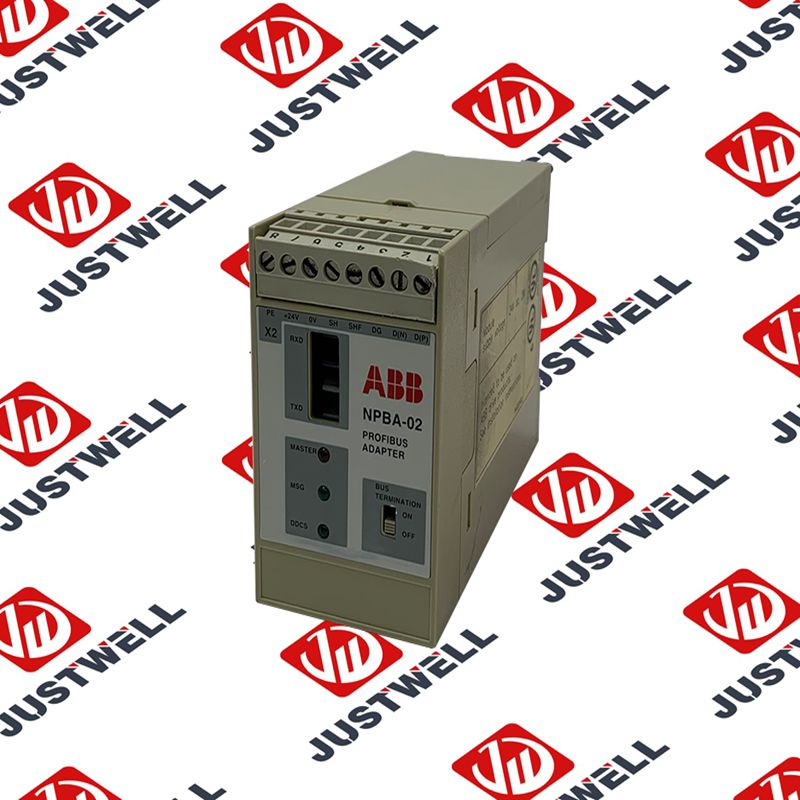
An ABB Interface Module serves as a specialized communication and adaptation bridge within an industrial automation network. Its primary role is to enable seamless data exchange between the central processor and various subsystems, such as remote I/O racks, intelligent field devices, or third-party control networks. These modules act as a translator, converting internal system bus signals into standardized industrial protocols. By providing physical and logical connectivity, they allow the control system to extend its reach over long distances and across different hardware platforms, maintaining high-speed synchronization and data integrity.
Product Parameters
The technical capacity of an interface module is defined by its connectivity and throughput:
- Supported Protocols: Compatibility with major industrial standards like PROFINET, PROFIBUS, Modbus TCP/IP, or EtherNet/IP.
- Transmission Rate: High-speed data transfer capabilities, often ranging from 10 Mbps to 1 Gbps depending on the physical layer.
- Maximum Node Count: The total number of sub-devices or I/O modules that a single interface can supervise.
- Distance Rating: The maximum cable length supported for copper or fiber optic connections before signal repeaters are required.
- Power Supply Requirements: Standard industrial DC voltage inputs with integrated overcurrent protection.
- Address Configuration: Method of node identification, such as rotary switches, DIP switches, or software-defined addressing.
Product Advantages
Interface modules are critical for creating flexible and cohesive automation architectures. Their advantages include:
- System Decentralization: Enables the placement of I/O modules closer to the field sensors and actuators, significantly reducing wiring costs.
- Protocol Interoperability: Allows different generations of hardware or equipment from different manufacturers to communicate within a single control loop.
- High Availability: Supports redundant network topologies (such as ring or star) to ensure communication remains active if a cable is damaged.
- Electrical Isolation: Provides a layer of protection that prevents electrical faults in one segment of the plant from affecting the central controller.
- Simplified Maintenance: Features localized diagnostics and status LEDs that help technicians quickly identify whether a fault is in the network or the hardware.
Precautions
To ensure stable network performance and hardware longevity, the following precautions are necessary:
- Network Termination: Ensure that proper termination resistors are applied at the physical ends of a serial segment to prevent signal reflection.
- Shielding Integrity: Use high-quality shielded cables and ensure the shield is correctly bonded to the functional earth to mitigate electromagnetic interference.
- Address Uniqueness: Verify that every interface module on a network has a unique hardware address to prevent communication collisions.
- Environmental Limits: Adhere to the specified vibration and temperature limits, as interface modules are often located in remote junction boxes rather than climate-controlled rooms.
- Firmware Synchronization: Ensure the interface module’s GSD/EDS files or internal firmware versions match the configuration in the engineering software.
Product Applications
Interface modules are deployed in complex or geographically distributed industrial environments. Common applications include:
- Remote I/O Stations: Linking blocks of inputs and outputs located on distant machinery back to a central control cabinet.
- Third-Party Integration: Connecting specialized equipment like weigh scales, motor drives, or analyzers to a main DCS or PLC.
- Subsystem Coordination: Bridging separate “islands of automation” within a factory to create a unified supervisory system.
- Long-Distance Telemetry: Managing data transmission for utilities such as water pumping stations or oil pipelines.
- Fieldbus Expansion: Extending the internal backplane of a controller to multiple expansion racks across a large facility.
Shipping Port: Xiamen, China
Payment: Bank of Chicago, Bank of Singapore
Express cooperation: fedex, DHL, UPS and your express account
Service: Professional Sales provides 24 hours /7 days online service
Please make an inquiry for more models:
| SD834 | ABB | EI813F | ABB |
| CI810B | ABB | AM801F | ABB |
| TB810 | ABB | SD812F | ABB |
| TK811V050 | ABB | AM811F | ABB |
| TB842 | ABB | TK802F | ABB |
| TB40A | ABB | PM803F | ABB |
| AO845A | ABB | FI820F | ABB |
| AO801 | ABB | FI810F | ABB |
| DI801 | ABB | EI803F | ABB |
| DO801 | ABB | SA801F | ABB |
| DI811 | ABB | SA811F | ABB |
| AI810 | ABB | SB808F | ABB |
| AI830A | ABB | FI830F | ABB |
| DP840 | ABB | SD802F | ABB |
| AO845A | ABB | AM895F | ABB |
| AI835A | ABB | SY809F | ABB |
| DO810 | ABB | EI812F | ABB |
| TB820V2 | ABB | EI811F | ABB |
| AO810V2 | ABB | RLM01 | ABB |
| AI820 | ABB | PM902F | ABB |
| DI821 | ABB | CI930F | ABB |
| AO820 | ABB | CP430B | ABB |
| DO802 | ABB | CP430T | ABB |
| CI801 | ABB | CP450T | ABB |
| DI810 | ABB | CP450T-ETH | ABB |
| AI845 | ABB | CP620 | ABB |
| AI801 | ABB | 07KT95 | ABB |
| DI803 | ABB | 07CR41 | ABB |
| DI802 | ABB | 07DC92 | ABB |
| TB40A | ABB | 07DI92 | ABB |
| CI840A | ABB | XI16E1 | ABB |
| TB825 | ABB | 07KP53 | ABB |
| BC810K02 | ABB | 07AI91 | ABB |
| PM866K02 | ABB | 3BSE018168R1 | ABB |
| PM861AK02 | ABB | 07KT98 | ABB |
| TB852 | ABB | 1SAP520100R0001 | ABB |
| PM851AK01 | ABB | GJR5252800R0100 | ABB |